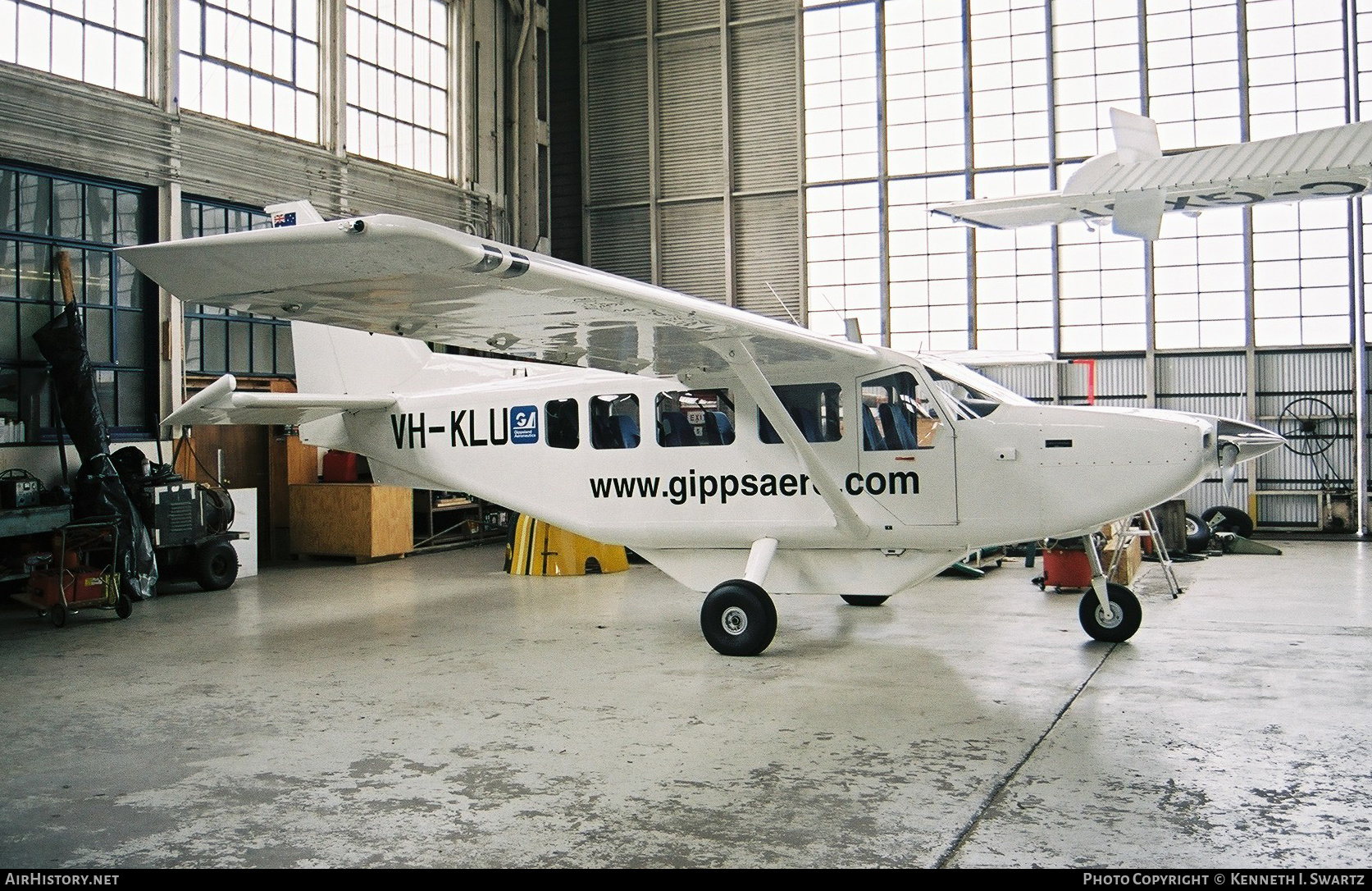
Ga 8 Aircraft - The Gippsland GA-8 Airvan has joined Australia's light aircraft industry and is the first commercial supply aircraft to be ordered from the Government Aircraft Corporation (GAF) Nomad. Built by Gippsland Aeronautics at Latrobe Airport in Victoria, the GA-8 Airvan was designed to FAR Part 23 and was an eight-person transport designed from the ground up to be safe, light, practical, robust and versatile in performance. remote airport.
The idea for the GA-8 arose from a visit to China by a delegation from the factory with the view that the Australian market would not be large enough for a utility aircraft used near the Ark, but a similar market was available in China and other developing countries.
Ga 8 Aircraft
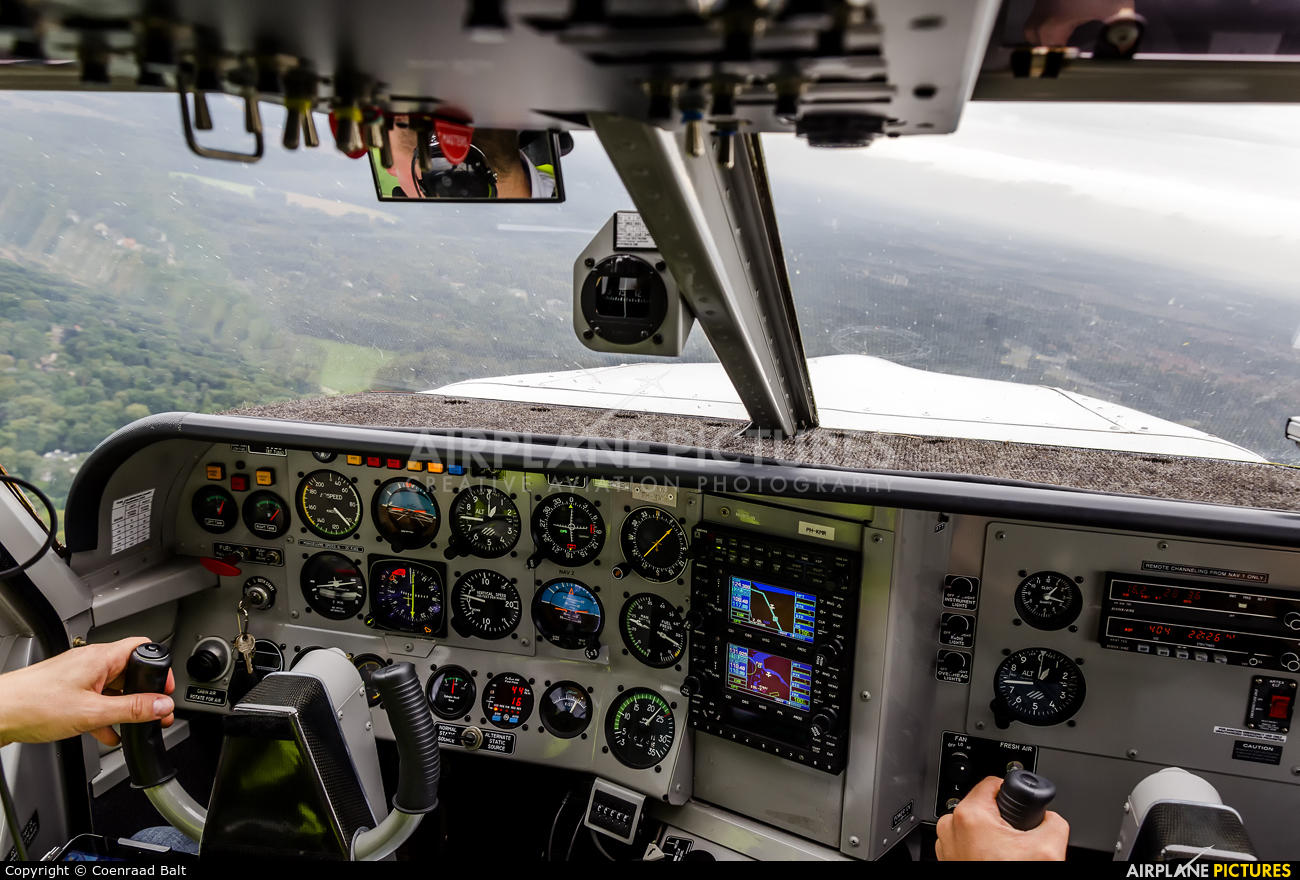
A full-frame house built to reflect the design, the cabin measures 1.27 m (50 in) wide and 1.19 m (47 in) high. It is also considered to connect the end of the power turbine, such as the Soloy turbo-pac, to the floating surface. Several investors have expressed interest in the design to replace the de Havilland DHC-2 Beaver for maritime tourism operations. There was room for the pilot and up to seven passengers. Cabin volume was 5.09 m³ (180 cu ft) and payload was 907 kg (2,000,000 lb).
Instrument Panel; Ground Control; Wing Flap System
A prototype known as a demonstration aircraft, unregistered but with the call sign VH-GAE, built in 1994, made its first flight on 3 March 1995 in the hands of Peter Furlong. This aircraft was displayed at the Airshows Downunder held in Avalon, VIC that year. This aircraft was powered by a 186 kW (250 hp) Lycoming O-540 engine. However, during a flight test on 2 February 1996, problems arose and the pilot had to eject from the aircraft.
Construction of a second prototype began in February 1996, which was the third aircraft to be built. This VH-XGA (c/n GA-8-96-03) was displayed at Avalon in 1997 and is said to represent a working aircraft. Another non-flying prototype was intended for testing. At the same stage, the third aircraft was fitted with an Avco Lycoming IO-580 engine, which produced a rated power of 2 hours, 450 rpm. Fuel capacity was 340 liters (74.8 Imp gals).
In 2002, the aircraft was operational with the Lycomi9ng IO-540K1A5 engine, which included a new tail that was longer and more chordal, the upper part of the fin no longer had an angle to its line and was fixed. The largest angle of the chord runs about half the length of the fin and has 40 percent of its surface under the tail. Fixed logo added.
The approval process continued for some time and finally in March 1999 the Airvan was granted a Provisional Type Certificate to FAR 23 Amendment 48 with full approval in October 2000. This was followed by Amendment 54 approval in March 2003 and in 2003 to the US FAA and Canada.
Gippsland Ga 8 Airvan
The first production aircraft was delivered to Queensland tourism, Air Fraser Island, examples were delivered to other tourism operators including Alligator Airways and Slingair in Western Australia, Wrights Air in the Northern Territory, etc. By mid-2005 it was operating with tour operators in seven countries, including South Africa, Indonesia and North America. Production was ramped up and four aircraft were delivered in 2001, 12 in 2002, 19 in 2003 and 23 in 2004. To meet demand, production increased year after year.
Example VH-MCN (c/n GA-8-02-015) was flown across the Pacific Ocean in 2002 to participate in the American Airlines Association (EAA) event at Oshkosh, Wisconsin. Today, the US Air Force counterpart invited bids for the purchase of aircraft to be used in the Civil Aviation Mission (CAP), which will be used in support of the security of the United States. CAP in the USA is the largest operator of a fleet of approx. 550 general aviation aircraft, listed in the United States Air Force Aviation Directory, that are routinely used for search and rescue, training, and surveillance missions. managers and civil servants.
Tests between the GA-8 Airvan and the Cessna 206 were conducted in the Rocky Mountains of Colorado, operating at Buena Vista at 2,422 meters (7,946 ft) above sea level, and another at Leadville, which is 3,026 m (9,927 m). ft) above sea level. Airvan's operation ended with a contract award in February 2003 with what was to be known as a rolling contract. By mid-2005, sixteen GA-8s had been delivered.
Finally, the cargo area was changed to be installed under the hull, this is an all-in-one volume of 0.51 m³ (18 cubic ft) with a capacity of 200 kg (440 lb) or items up to 2.4 m ( 7 ft) 11 in) in length. The first sheet was installed on VH-MFE (c/n GA-8-04-065) and flown in December 2004, delivered to the Missionaries of the Air Force (MAF).
Gippsaero Ga8 Airvan Images, Stock Photos & Vectors
The company also looked at putting a turbocharged engine on the aircraft to meet the demands of operators demanding increased hot-and-high performance. The TIO-540 variant of the engine was first installed in VH-TBU (c/n GA-8-02-011) and began its flight trials in November 2004, this engine provides a sea thrust of up to 3,658 m (12,000 ft) ).
A diesel engine is also being considered in the future, with parts being examined by SMA and Thielert. There was also a longer modification, this to be fitted with a 335 kw (450 shp) Rolls Royce/Allison 250-B17F turboprop, this aircraft, if built, would be known as a Taska. Wipline in the US has developed a variant of its 4000 series to be installed, with certification received in 2006, followed by a ski plane to work in ski resorts or on glaciers, as seen in New Zealand.
Gippsland Aeronautics has been involved in a number of aviation-related programs, including further certification to extend the life of the Piper Navajo and Chieftain airfoils, and modification of the Piper Pawnee, among others. The company operated out of Latrobe Airport and was looking to expand the size of its facility to accommodate future shipments.
At a ceremony at Latrobe Airport on 23 August 2006, the 100th Airvan was rolled out and presented to the Air Missionary Foundation for use in Papua New Guinea. At the same time, Airvan VH-FGN (c/n GA-8-03-025) tested a three-engine Lycoming engine. In time from aircraft c/n 163, the GA-8 had a maximum take-off weight of 91 kg (200 lb), and conventional aircraft could operate at the new weight following the implementation of the service announcement.
Gippsland Ga8 Cleared To Fly In New Zealand By Caa
In early 2007, Gippsland Aeronautics announced that it planned to sign an agreement with Rolls Royce to install a variant of the 250-B17F turboprop in the GA-8, and that following the release of the GA-8 variant known as the GA- 10, this must be a model with an elongated hull that could accommodate ten. Discussions were also held with the aim of concluding an agreement with an Indian company to fill the GA-8 part built in the Indian subcontinent, which would allow the company to increase production to 30 aircraft per year.
In 2010, the Airvan was transported around the world. The trip was made to raise funds for malaria research by GA-8 VH-BYI (c/n GA-8-TC-320-120). The aircraft, piloted by Kenneth Evers and Timothy Pryse, departed Bendigo, VIC on 8 May and traveled 51,254 km (31,848 km) in 263 hours using 16,000,000 liters (3,519 Imp gals) of fuel, returning after 62 days.
In March 2011, GippsAero, as the company was then called, announced that it was working with Wipaire to design, build and test the GA-8-380 Airvan equipped with Wipaire 3450 personal watercraft, with testing beginning in October 2011 and to be released in 2012 .

In mid-2014, the owner of the Indian company, Mahindra, renamed the aircraft, the GA-8 became known as Airvan 8. In 2014, Wipaire Inc owned the GA-8 and this aircraft N495KB (c/n GA-8.8 and Canada) , especially Alaska.
X Hangar Gippsland (gipps Aero) Ga 8 Airvan N255av Livery
At the time, Mahindra said it was considering a new factory for the Airvan 8, and since 90 percent of the planes were manufactured in the United States, assembled at the company's headquarters in Seattle and shipped to Australia for final assembly, it was considering moving production to the United States, where it would be possible to reduce the cost of the plane.
October 2014 Airvan 8 received certification in Brazil, where it is located
Waltham 8 day aircraft clock, wakmann 8 day aircraft clock, vans rv 8 aircraft, 8 day aircraft clock, dc 8 aircraft, 3 8 aircraft cable, aircraft mechanic jobs atlanta ga, rv 8 aircraft for sale, galvanized aircraft cable 3 8, aircraft ga, ga aircraft for sale, dash 8 aircraft for sale
0 Comments